
Flat Feet in Adults: When Support Can Help
- footporium
- Aug 14
- 6 min read

A foot that rolls inwards while walking is not automatically a problem. Many people have low arches, or arches that lower when they stand, and remain completely comfortable. Flat feet in adults become more relevant when they are linked with pain, reduced walking tolerance, repeated injuries or a change in the way the foot looks and functions.
The key question is not whether your arch appears flat. It is whether the foot is coping with the demands placed on it at work, during exercise and in daily life. A biomechanical assessment can distinguish a normal variation in foot shape from a pattern that is overloading the foot, ankle or the joints further up the leg.
What are flat feet in adults?
Flat feet, sometimes called fallen arches, describe a foot with a low or absent-looking arch when standing. In a flexible flat foot, the arch may still be visible when sitting or when standing on tiptoe, but it lowers as body weight moves through the foot. This is common and does not necessarily require treatment.
Some people have had low arches since childhood. Others notice a gradual change later in life, perhaps after an injury, a period of reduced activity, weight change, pregnancy or increasing demands from walking, running or standing at work. The supporting structures of the foot, including muscles, ligaments and tendons, must manage load with every step. If they are struggling, symptoms can develop.
A newly flattened foot on one side, particularly with pain or swelling around the inside of the ankle, warrants professional assessment. In some cases, the posterior tibial tendon, which helps support the arch, may be irritated or weakened. This needs a different approach from a longstanding, painless low arch.
Why a low arch can lead to pain
The arch is not simply a fixed curve. It changes shape to absorb impact and then provide a firmer base for push-off. When the foot rolls inwards more or for longer than the tissues can comfortably control, forces may increase through particular areas.
Pain is often felt in the heel, the arch or the inside of the ankle. Some people develop aching across the midfoot, soreness under the ball of the foot, shin pain or recurrent ankle discomfort. Because the foot is the foundation for movement, altered mechanics can also contribute to knee, hip or lower back symptoms. That does not mean flat feet are always the cause of pain in these areas. It does mean the way the foot and leg move should be considered as part of a wider assessment.
Shoes matter too. A worn, unsupportive shoe may be manageable for a short walk but expose symptoms during a long shift, a city commute or a run. Equally, a very stiff shoe or arch support that does not match the person’s foot can feel intrusive and uncomfortable. Effective treatment is individual rather than based on a one-size-fits-all idea of correction.
Symptoms that should not be ignored
Occasional tiredness after an unusually active day is common. Persistent or progressive symptoms deserve closer attention, especially if they change how you walk or limit activities you enjoy.
Consider booking an assessment if you have:
pain in the arch, heel, midfoot or inside of the ankle that continues beyond a few weeks;
swelling, warmth or tenderness around the ankle or along the inside of the foot;
increasing difficulty standing on one leg or rising onto tiptoe;
repeated problems with shin pain, knee pain or ankle sprains; or
a noticeable change in one foot’s shape, or pain that affects walking, work or sport.
Sudden severe pain, inability to bear weight, marked swelling after injury, numbness, or a red and hot foot should be assessed urgently through the appropriate healthcare service.
Assessment looks beyond the arch
A useful assessment for flat feet in adults does more than inspect the footprint. It starts with your symptoms, medical history, footwear, activity levels and the situations that provoke pain. For example, the needs of a runner training for an event will differ from those of someone whose pain develops after hours on a hard floor at work.
A podiatrist may assess how the feet stand, how the ankle and joints move, muscle strength, balance and the way you walk. They will also look at the relationship between the foot, lower leg, knee and hip. This helps identify whether pain is likely to be driven by load, tissue irritation, limited movement, weakness, footwear, an old injury or a combination of factors.
Where required, referral for imaging or input from another healthcare professional may be appropriate. Persistent pain should not be dismissed as something you must simply tolerate because you have flat feet.
Treatment should match the cause
Not everyone with low arches needs insoles. If your feet are painless and functioning well, reassurance, sensible footwear and gradual progression of new activities may be all that is needed. Treatment becomes more useful when there is pain, loss of function or repeated overload.
Footwear and load management
Footwear should provide a stable, comfortable base without squeezing the toes or forcing the foot into an unnatural position. The best choice depends on your foot shape, job, activity and symptoms. A shoe that feels supportive for walking may not be the right option for gym work or running.
Temporarily reducing the activity that aggravates symptoms can allow irritated tissues to settle. This does not usually mean stopping all movement. It may mean shortening walks, changing running distance or pace, choosing lower-impact exercise for a period, or building standing time more gradually. The aim is to keep you active within a manageable level of discomfort.
Exercises and strength
Targeted exercises can improve the capacity of the calf, foot and lower-leg muscles to support movement. Depending on the findings, this may include calf flexibility work, heel raises, balance training and strengthening of muscles that help control the foot and ankle.
Exercises are most effective when they are specific and progressed appropriately. Generic online routines can be useful for general conditioning, but they cannot establish whether the main issue is tendon irritation, joint stiffness, weakness or another condition. Pushing through increasing pain is rarely productive.
Orthoses and insoles
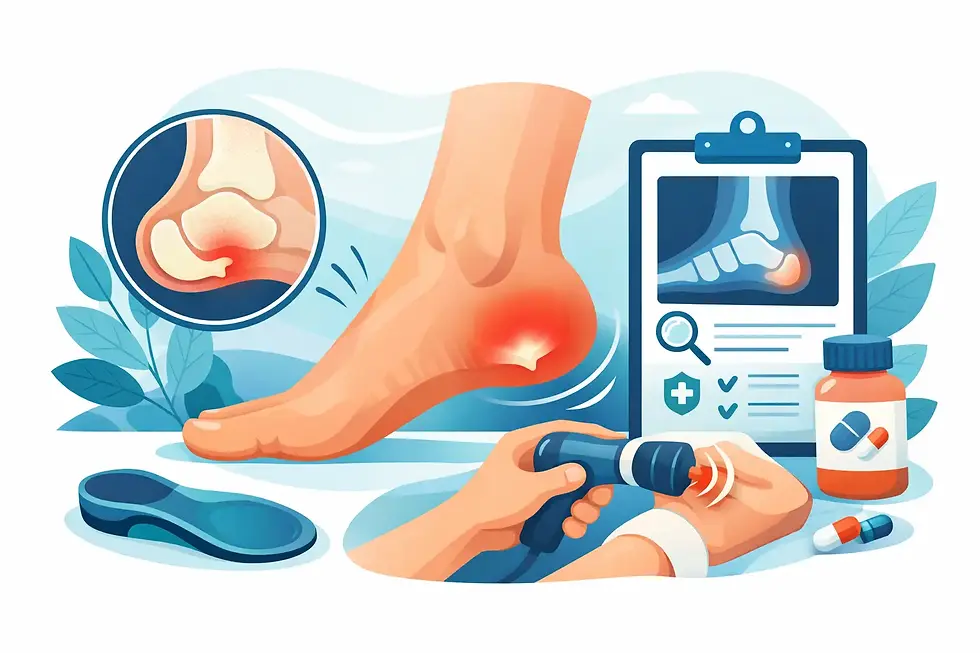
Orthoses are devices worn inside footwear to influence pressure, support areas of the foot and improve comfort during walking or activity. They do not need to make every foot look perfectly arched to be successful. Their purpose is to help reduce harmful load and give painful tissues a better environment in which to recover.
Some people respond well to an off-the-shelf insole. Others need a more tailored solution because of their foot shape, symptoms, footwear requirements or activity level. Custom options, including Phits insoles, can be considered when assessment shows that individualised support is likely to be beneficial.
There can be an adjustment period with orthoses. A gradual wear-in plan and review are important, particularly if you have longstanding pain or are returning to exercise. Insoles work best alongside appropriate shoes, strength work and sensible activity planning, not as a substitute for all three.
When flat feet are not the whole story
It is easy to blame a low arch for any pain below the knee, but several conditions can produce similar symptoms. Plantar heel pain, arthritis, stress injury, nerve irritation, tendon problems and inflammatory conditions may each need different management. Diabetes, circulation concerns and certain neurological conditions also change how foot symptoms should be assessed.
This is why self-diagnosis can be frustrating. A support bought online may feel helpful, do nothing, or occasionally aggravate the problem if it does not suit the underlying issue. A clear diagnosis and plan are more valuable than repeatedly changing shoes in the hope that one will solve persistent pain.
Getting back to comfortable movement
The goal is not to create a textbook arch. It is to help you walk, work, exercise and enjoy everyday movement with confidence and less pain. For some people, that means a few footwear changes and a strengthening programme. For others, particularly where symptoms have been present for months or affect the wider lower limb, a more detailed biomechanical plan is appropriate.
If low arches are making your feet or legs ache, an assessment with a podiatry biomechanics specialist can provide practical answers rather than guesswork. Small, well-targeted changes made early can often prevent a manageable problem from becoming the reason you avoid the activities that matter to you.


Comments