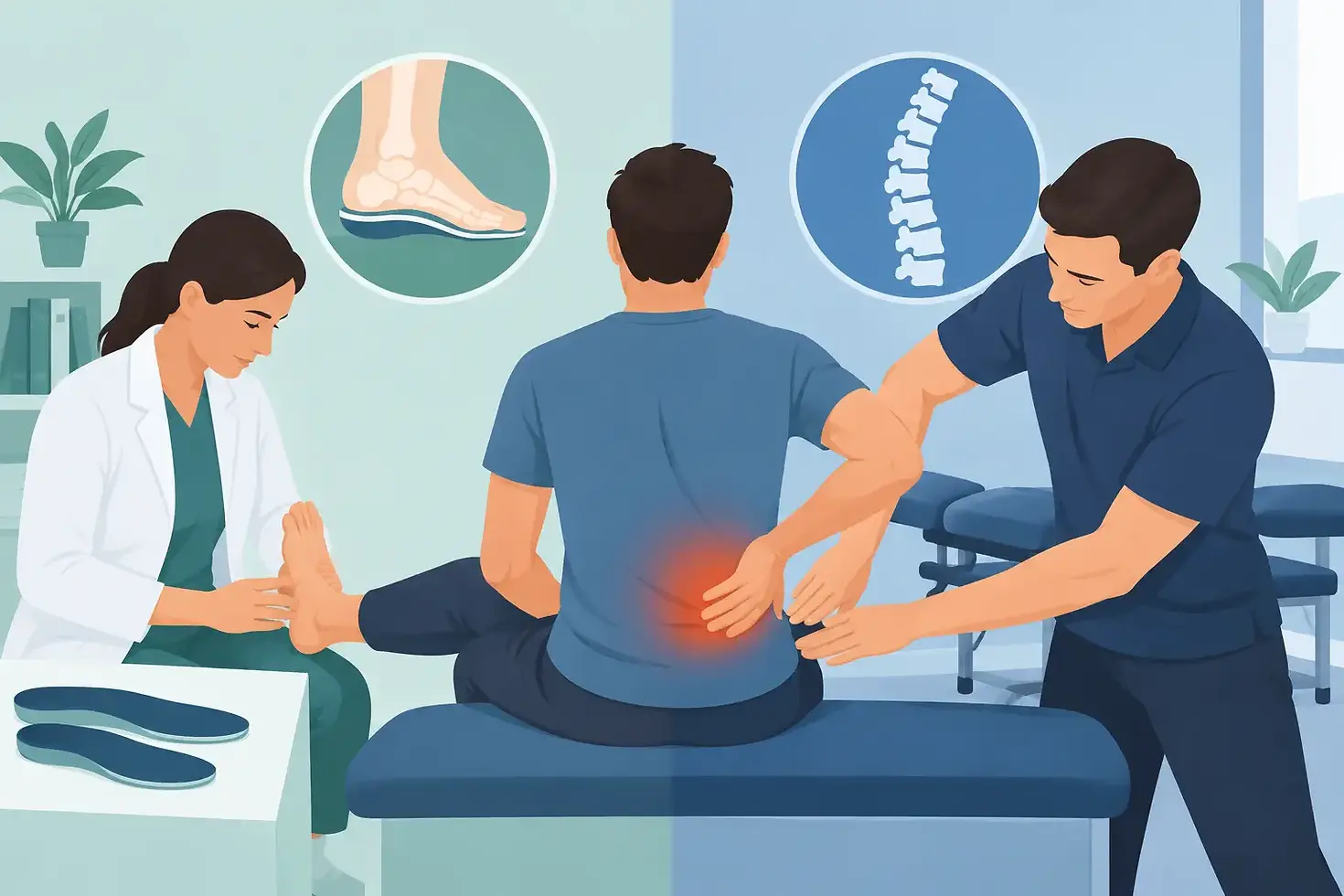
Podiatrist Versus Chiropractor for Back Pain

A sore back is not always a back-only problem. If pain began alongside a change in walking, a running injury, recurring heel pain or a feeling that one leg is working harder than the other, the question of podiatrist versus chiropractor back pain becomes more relevant. Both professionals may help with certain musculoskeletal symptoms, but they assess different parts of the movement system and use different approaches.
For many people, the most useful starting point is not choosing the practitioner with the quickest appointment. It is working out where the problem may be coming from, what is provoking it and whether foot and lower-limb mechanics are contributing to the load travelling through the hips and lower back.
Podiatrist versus chiropractor for back pain
A chiropractor primarily assesses and manages musculoskeletal pain, often with a focus on the spine, joints, muscles and nervous system. Their treatment may include hands-on techniques, movement advice, exercise and lifestyle guidance. For some people with uncomplicated mechanical back pain, this approach can be helpful, particularly when stiffness, reduced spinal movement or muscle tension are prominent.
A podiatrist specialises in the feet, ankles and lower limbs. A podiatrist with expertise in biomechanics looks at how the feet function during standing, walking and running, and how this affects the rest of the kinetic chain - the ankles, knees, hips and lower back. Treatment may involve footwear advice, rehabilitation exercises, temporary padding or strapping, and custom orthoses where clinically appropriate.
Neither route is automatically better. The right choice depends on the pattern of symptoms, your medical history and the likely source of excess load. In some cases, a combined approach is sensible. A chiropractor may address spinal symptoms while a podiatrist identifies a lower-limb factor that keeps aggravating them.
When foot mechanics can affect the lower back
The body does not move in isolated sections. Each step starts at the ground, and the way the foot accepts and transfers load can influence the position and workload of joints further up the leg. This does not mean that every case of back pain is caused by the feet. Back pain can have many drivers, including muscle strain, prolonged sitting, disc-related issues, arthritis, stress, reduced conditioning and injury.
However, a biomechanical assessment can be valuable when back pain occurs alongside lower-limb symptoms or a noticeable change in gait. For example, someone with painful heel pain may shorten their stride and avoid loading one side. Over time, this altered walking pattern can place extra demand on the opposite hip or lower back.
Likewise, limited ankle movement, unstable footwear, a marked difference in foot posture between sides, previous ankle injuries or pain beneath the forefoot can alter how force moves through the body. Runners may notice this as back tightness after longer distances. People who stand for work may feel it as a gradual ache by the end of the day. The key issue is not whether a foot is simply labelled ‘flat’ or ‘high arched’, but how it functions under load and whether that function relates to your symptoms.
Signs a podiatry assessment may be the better first step
Consider seeing a podiatrist when back pain is accompanied by foot, ankle, shin, knee or hip discomfort; when symptoms are worse after walking or running; or when you have noticed limping, uneven shoe wear or a change in the way you move.
It may also be appropriate if you have recently developed plantar heel pain, forefoot pain or an ankle problem and your back symptoms followed. In these situations, treating only the painful area in the back can provide short-term relief without addressing the factor that is changing your gait.
A podiatrist will usually discuss your symptoms, activity levels, work demands, footwear, injury history and health background. They may assess joint range of motion, muscle strength, foot and ankle function, balance, standing alignment and walking or running pattern. The aim is to form a clinical picture, not to assume that the feet are responsible before examining you.
When chiropractic care may be more suitable
Chiropractic assessment may be a reasonable choice where the main concern is localised spinal pain, stiffness or restricted movement, with no indication that foot or lower-limb symptoms are involved. Some people prefer a treatment plan that is centred on the spine and includes manual therapy alongside advice on posture, movement and exercises.
It is still worth discussing the full picture. Mention any old ankle sprains, knee pain, changes in your training, foot pain or symptoms triggered by particular shoes. A good musculoskeletal clinician should consider these details and refer or collaborate when another area needs specialist input.
Manual treatment can be one part of care, but it should not be the whole plan for persistent back pain. Lasting improvement commonly requires a clear diagnosis or working explanation, sensible activity modification and a progressive return to normal movement. The most suitable treatment should be based on your examination findings rather than a one-size-fits-all package.
What treatment from a biomechanics-focused podiatrist can involve
If a podiatric assessment identifies a lower-limb contribution to your back symptoms, treatment is tailored to the finding and your goals. A person who wants to return to running needs a different plan from someone whose pain is aggravated by long shifts on their feet.
Footwear advice is often a useful starting point. Shoes that are worn down, poorly fitted or unsuitable for your activity can affect comfort and stability. This does not mean everyone needs highly structured footwear, but the right shoe should support the demands placed upon it.
Exercise may focus on foot and ankle strength, calf flexibility, balance, hip control or gradual loading. These areas work together during walking and running, so improving one weak link can reduce compensation elsewhere.
Orthoses, sometimes called insoles, may also be recommended. They are not a cure for all back pain, and they should not be issued solely because someone has a particular foot shape. When indicated, they can help redistribute pressure, improve comfort and influence the way the foot functions during activity. Custom options, including Phits insoles, may be considered where a detailed assessment shows they are likely to support your movement and symptoms.
At Footporium Podiatry, biomechanical care is centred on understanding these individual movement patterns rather than supplying a generic device. If another professional is better placed to investigate or manage part of the problem, collaborative care is encouraged.
Do not overlook medical assessment and red flags
Most back pain is not caused by a serious condition, but some symptoms need prompt medical assessment rather than routine podiatry or chiropractic care. Contact NHS 111, your GP or seek urgent care if back pain is associated with any of the following:
new difficulty controlling your bladder or bowels
numbness around the genitals, buttocks or inner thighs
significant or worsening weakness in either leg
fever, unexplained weight loss, severe unrelenting night pain, or pain after a major accident
You should also speak to a GP if pain is persistent, worsening, affecting sleep or daily function, or accompanied by symptoms such as tingling, numbness or pain travelling below the knee. These symptoms do not always indicate something serious, but they should be assessed appropriately.
Choosing the right next appointment
Think about what happens before and during the pain. Does your back hurt after sitting, lifting or twisting, with no meaningful leg or foot symptoms? A spinal musculoskeletal assessment may be the most direct route. Does pain appear after walking, running or standing, alongside heel, foot, ankle, knee or hip problems? A podiatric biomechanics assessment may reveal a contributing factor that is otherwise being missed.
You do not have to prove the cause before seeking help. Bring a clear account of when symptoms started, what makes them better or worse, the activities you have reduced and any previous injuries. Wear or bring the shoes you use most often if walking or running triggers your pain.
Back pain can be frustrating when it limits work, exercise and ordinary daily comfort. The most helpful care starts by looking carefully at how your body moves, then choosing treatment that gives you a realistic, supported path back to the activities that matter to you.


Comments