Phits Insoles vs Orthotics: What Changes?

If you have been told you may need support in your shoes, the question is rarely as simple as buying an insole and getting on with your day. The real issue in phits insoles vs orthotics is whether you need general comfort, precise biomechanical correction, or something that sits between the two. That difference matters if you are dealing with heel pain, knee pain, recurring sports injuries, or discomfort that keeps returning despite changing footwear.
For many people, the word orthotic is used to describe almost anything placed inside a shoe. Clinically, that can blur together products that are doing very different jobs. Some are there to cushion pressure. Some aim to improve how force moves through the foot and lower limb. Some are highly personalised, while others are chosen from a standard range and adjusted to fit.
Phits insoles vs orthotics: the basic difference
Orthotics is the broader category. An orthotic device is designed to influence foot function, redistribute pressure, improve alignment, or reduce strain on tissues and joints. That can include prefabricated devices, semi-custom options, and fully custom orthoses prescribed after an assessment.
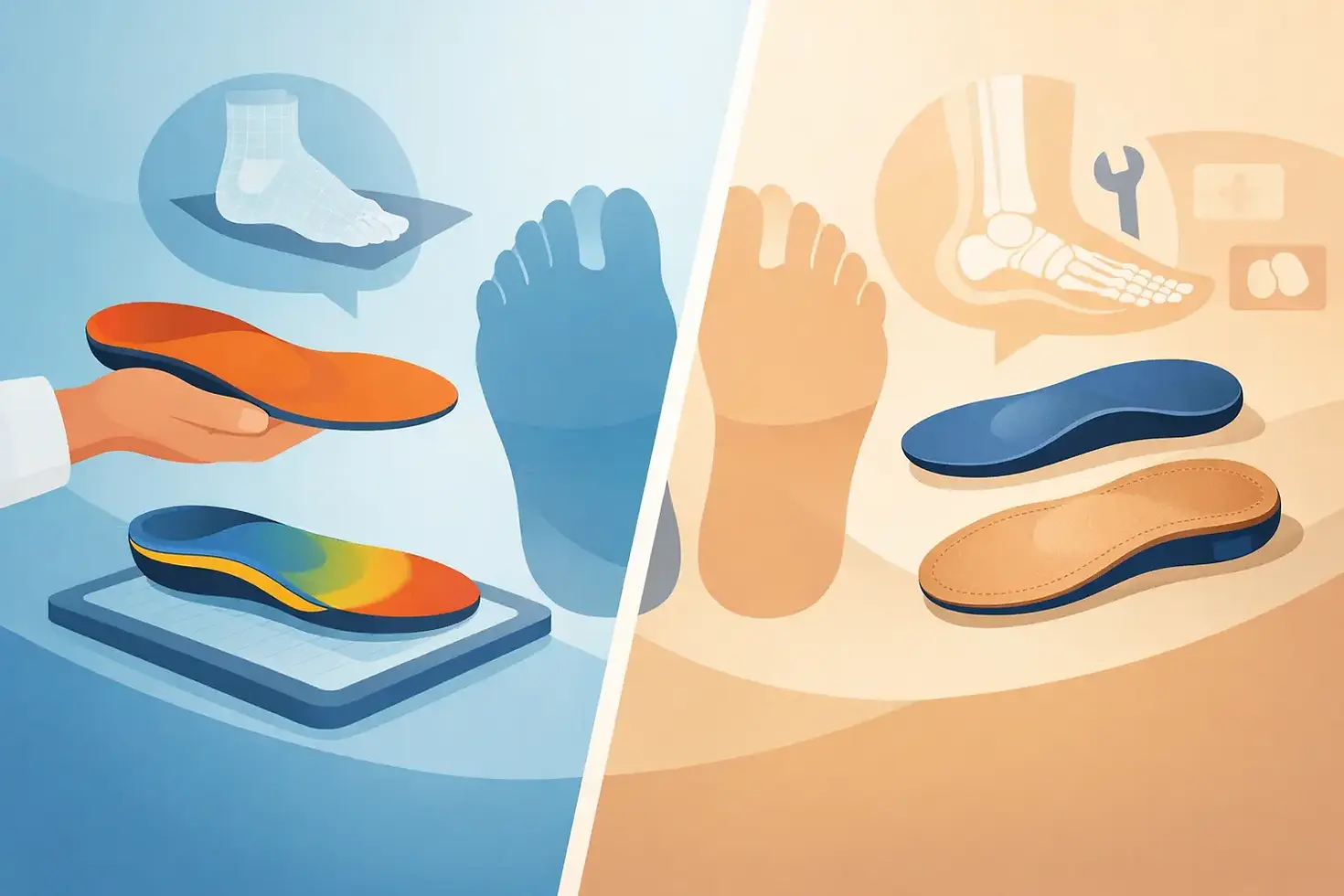
Phits insoles are a specific type of custom 3D-printed orthotic. They are not a separate concept from orthotics so much as one particular way of making them. The distinction is useful because it changes how the device is produced, how closely it matches your foot and gait pattern, and sometimes how fine-tuned the final result can be.
A standard orthotic may be made from a cast, foam impression, digital scan, or selected from a pre-made shell and then modified. Phits devices are generally created from dynamic and static assessment data, then manufactured through 3D printing to a prescription. In practical terms, that means the process is designed to be highly specific rather than based on a more general template.
Why the comparison matters in clinic
Patients usually do not ask for technology for its own sake. They want to know whether they will walk more comfortably, run without aggravating symptoms, or get through a workday without aching feet and tired legs. That is why the more useful question is not which option sounds more advanced, but which option is appropriate for the problem in front of you.
If someone has simple pressure discomfort from standing for long hours, a well-chosen orthotic or supportive insole may be enough. If another person has persistent plantar heel pain linked to excessive loading, or knee pain affected by foot mechanics, the prescription may need to be much more precise. In those cases, the assessment is often more important than the label on the device.
This is particularly true when pain is not limited to the foot. Foot mechanics can contribute to ankle strain, shin pain, patellofemoral symptoms, hip discomfort, and low back irritation in some patients. Not every case starts at the foot, but when it does, using the wrong type of support can leave the underlying issue untouched.
What Phits insoles are designed to do
Phits insoles are custom-made orthoses produced using digital design and 3D printing. They are often prescribed following gait analysis and biomechanical examination, with the aim of matching the device to how the patient actually moves rather than just how the foot looks when standing still.
That can be valuable because feet do not behave the same way in walking, running, climbing stairs, or standing under fatigue. A device that looks reasonable on paper may still fall short if it does not address the real loading pattern during movement.
The potential advantages of Phits insoles include a close anatomical match, consistency of manufacture, and the ability to tailor support to the individual prescription. For active patients, that degree of specificity can be helpful, especially when symptoms are linked to repeat loading over time. It may also suit people who have already tried simpler insoles without lasting benefit.
That said, custom does not automatically mean better for everyone. If the diagnosis is wrong, the best-made orthotic in the world will not solve the problem. A carefully selected prefabricated orthotic can sometimes produce excellent results, particularly in more straightforward cases.
What traditional orthotics can include
When people compare phits insoles vs orthotics, they often assume orthotics means one standard product. It does not. Traditional orthotics can range from soft accommodative devices for pressure relief through to firmer functional orthoses intended to change foot motion and load distribution.
Some are prescribed for arthritis, diabetic pressure management, or painful corns under high-load areas. Others are aimed at controlling excessive pronation, offloading an injured tendon, or reducing strain on the plantar fascia. Materials, shape, rigidity, posting, and top cover all affect how the device feels and performs.
This is why a proper assessment should come before the product decision. The same symptom can have different causes. Two runners with forefoot pain may need entirely different solutions depending on joint mobility, calf tightness, training load, footwear, and pressure pattern.
Which is better for pain relief?
There is no honest blanket answer. Better depends on the diagnosis, the severity of the problem, your activity level, your footwear, and how your body responds to support.
For some patients, a prefabricated or traditionally made orthotic works very well and is entirely appropriate. It may provide enough control and comfort without the expense of a more advanced custom device. For others, especially those with recurrent symptoms, complex foot posture, limb asymmetry, or pain that extends up the kinetic chain, a more customised prescription may offer a better chance of meaningful improvement.
It also depends on your expectations. If your goal is to reduce discomfort in daily walking, one solution may be enough. If you are trying to stay active, return to training, or manage a long-standing biomechanical issue, the precision of a custom device may matter more.
Comfort is part of the picture too, but not the whole picture. An orthotic can feel soft and pleasant yet do very little to alter the loading pattern that keeps provoking pain. Equally, a more corrective device should not feel punishing. The right prescription balances support, tolerance, and function.
Assessment matters more than the label
The strongest predictor of success is usually not whether a device is called an orthotic or a Phits insole. It is whether your clinician has identified the real driver of symptoms and matched the treatment plan to it.
A good biomechanical assessment looks beyond the painful spot. It considers joint movement, muscle strength, gait pattern, footwear, activity demands, previous injuries, and how symptoms behave over time. Sometimes orthoses are the main treatment. Sometimes they are one part of a wider plan that may also include stretching, strengthening, footwear changes, load management, or advice on return to activity.
This matters because orthotics are not magic. They are tools. Used well, they can reduce stress on irritated tissues and improve movement efficiency. Used without a clear diagnosis, they can become an expensive guess.
At a specialist biomechanics clinic such as Footporium Podiatry, that distinction is central. The goal is not simply to issue insoles, but to understand why the pain is happening and whether orthotic therapy is likely to change the outcome.
Who might benefit most from Phits insoles?
Phits insoles may be worth considering if you have persistent heel pain, repeated sports injuries, pain linked to walking or running mechanics, or symptoms that have not settled with simpler off-the-shelf support. They may also be helpful if your case is mechanically complex and requires a more tailored approach.
Children and adults with significant gait concerns can also benefit from careful orthotic prescription, but the device choice should always reflect the clinical picture. In growing children especially, treatment decisions should be based on symptoms, function, and development rather than appearance alone.
For patients with very specific shoe demands, there can be trade-offs. A highly customised orthotic still has to fit the footwear you wear most often. Slim business shoes, school shoes, football boots, and running shoes all present different constraints. A well-prescribed device has to work in the real world, not just in the clinic.
How to decide between phits insoles vs orthotics
Start with the problem, not the product. If your pain is mild and recent, a simpler orthotic approach may be appropriate. If symptoms are longstanding, recurrent, or affecting the ankle, knee, hip, or back as well as the foot, it is sensible to seek a biomechanical assessment before choosing.
Ask what the device is meant to do. Is it cushioning pressure, limiting harmful motion, redistributing load, or improving efficiency through gait? If that has not been clearly explained, you do not yet have enough information.
Also ask how success will be measured. Better walking tolerance, reduced morning heel pain, improved training consistency, or less strain by the end of the day are all reasonable goals. An orthotic should be prescribed with an outcome in mind, not simply because a foot looks flat or rolls in.
The best choice is the one that fits your diagnosis, your body, and your daily demands. If you are weighing up Phits insoles against other orthotics, the most helpful next step is not to choose a technology. It is to get clarity on what your feet are asking for.


Comments