
How to Relieve Arch Pain Walking Comfortably
- footporium
- Jul 11
- 5 min read

A painful arch can turn an ordinary walk to the station, a shift at work or a dog walk into something you start planning around. If you are wondering how to relieve arch pain walking, the best first step is to reduce the irritation without completely ignoring why it started. Arch pain is often linked to the way the foot is loading, but the precise cause matters when choosing treatment.
A short period of sensible self-care may settle a mild flare-up. However, pain that keeps returning, changes the way you walk or limits your normal activity deserves a proper assessment. The aim is not simply to make walking bearable for a day or two, but to help you move more comfortably and confidently over the longer term.
Why does the arch hurt when you walk?
The arch is not one single structure. It is supported by ligaments, muscles, tendons and the plantar fascia, the firm band of tissue that runs along the sole of the foot. Each step asks these structures to absorb load and help the foot adapt to the ground before pushing you forwards.
Pain may develop after a sudden increase in walking, running, standing or hill work. It can also be associated with shoes that are worn out, too flexible or poorly suited to your foot shape. Tight calf muscles, a change in body weight, previous injury and altered foot mechanics can all affect the load travelling through the arch.
Some people feel a pulling or burning sensation through the sole. Others notice a focused ache in the middle of the foot, discomfort near the heel, or pain that increases the longer they are on their feet. These patterns can overlap. Plantar fascia irritation is common, but tendon problems, joint irritation, nerve symptoms and bone stress injuries can also cause arch or midfoot pain. This is why persistent pain should not automatically be labelled as plantar fasciitis.
How to relieve arch pain walking day to day
Reduce the load, rather than stopping all movement
If walking is making the pain build steadily, temporarily shorten your routes and avoid long hills, uneven ground and fast-paced walking. Break necessary walking into smaller portions where possible. For example, take a brief sitting break during a shopping trip or choose a flatter route for a few days.
Complete rest is not always necessary or helpful, particularly if it leads to stiffness and loss of conditioning. Instead, use symptoms as a guide. Mild discomfort that settles quickly and is not worse the following morning may be manageable. Sharp pain, limping or pain that increases after each walk means the current level of activity is probably too much.
Check your footwear before buying anything new
Supportive footwear can make a meaningful difference, especially when pain has appeared after a change in shoes. A suitable walking shoe should have a stable heel counter, enough depth and width for the foot, and a sole that bends mainly around the forefoot rather than folding easily through the middle.
Very flat, thin or excessively flexible shoes may leave the arch working harder. Equally, a shoe that feels aggressively hard under the arch can be uncomfortable and may simply shift pressure to another area. The right choice depends on your foot, walking demands and the location of your pain.
Look at the outsole as well as the upper. If one side is heavily worn down, the shoe may no longer provide stable support. Rotate between pairs if you walk a great deal, and avoid suddenly moving from supportive trainers to unsupportive sandals or slippers during a painful episode.
Use temporary cushioning or arch support carefully
An off-the-shelf insole or simple arch support can reduce strain for some people, particularly when their footwear has little structure. It should feel comfortable from the outset. A support that presses sharply into the arch, causes numbness or makes your symptoms worse is not the right option.
Insoles are not a universal solution. A generic device cannot account for every foot shape, gait pattern or source of pain. If you repeatedly rely on supports, or have tried them without improvement, a biomechanical assessment can establish whether a more tailored approach is appropriate.
Gentle mobility can help, but avoid forcing a painful stretch
Calf tightness can increase tension through the sole of the foot as you walk. Gentle calf stretches may be useful, particularly after sitting or before a longer walk. Keep the heel down, lean forwards gradually and hold a comfortable stretch rather than pushing into pain.
You can also try slowly rolling the sole of the foot over a soft ball while seated. This may ease a tight, achy feeling, but it should not be painful. Avoid vigorous rolling over a tender spot or using hard objects that leave the sole more irritated afterwards.
Settle a flare-up after walking
After activity, putting your feet up for a short period and applying a wrapped cold pack for 10 to 15 minutes may help if the area feels hot, sore or swollen. Do not place ice directly on the skin. Pain relief medication may be suitable for some people, but it is best to follow advice from a pharmacist or clinician, especially if you have other health conditions or take regular medication.
Build support and strength once acute pain settles
When pain is calmer, gradual strengthening helps the foot and lower leg cope with walking demands. Simple exercises such as controlled calf raises, toe lifts and balance work can be beneficial when chosen at the right stage. The key is progression: begin with a level that does not significantly worsen symptoms, then increase repetitions or walking distance gradually.
It is tempting to test the foot with one long walk as soon as it feels better. This is a common reason for a flare-up. A more reliable approach is to return to usual distances in stages and observe how the foot feels later that day and the next morning.
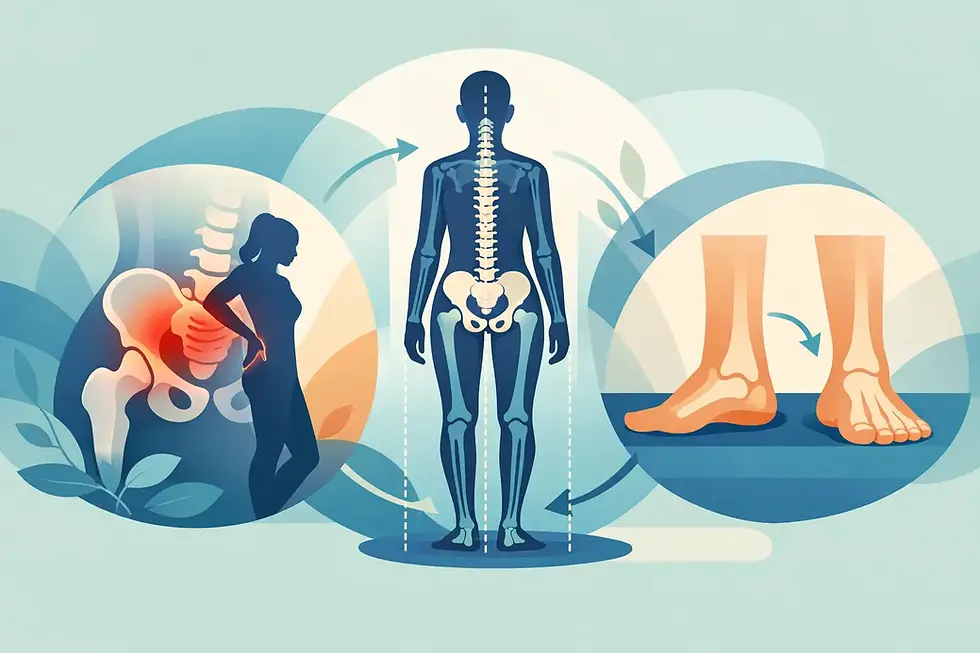
Foot mechanics can influence more than the arch. If the foot is not controlling load effectively, the effects may be felt at the heel, ankle, shin, knee, hip or lower back. That does not mean every ache comes from the feet, but it is a useful reason to consider the whole movement pattern rather than treating the sore area in isolation.
When arch pain needs a podiatry assessment
Book an assessment if your arch pain has not improved after one to two weeks of sensible activity modification and supportive footwear, or if it is recurring. A podiatrist can examine the painful structures, assess joint movement, muscle strength, footwear and walking pattern, then explain what is most likely driving the problem.
At Footporium Podiatry, biomechanical assessment is used to look beyond the immediate symptom and identify how the foot and lower limb are managing load. Treatment may include a personalised rehabilitation plan, footwear advice, temporary padding or strapping, and where clinically appropriate, custom orthotic solutions such as Phits insoles.
Seek more urgent medical advice if you have any of the following:
severe pain after a fall, twist or impact
marked swelling, bruising or an inability to bear weight
redness, heat, fever or a wound that is not healing
numbness, tingling or a change in foot colour
pain that is severe at rest or wakes you at night
People with diabetes, reduced circulation, inflammatory arthritis or reduced sensation in their feet should seek professional advice earlier, even when the pain initially appears minor.
A better way to return to comfortable walking
Relief usually comes from matching the response to the cause: easing overload, wearing footwear that supports rather than fights the foot, and building capacity gradually. If a few small changes are not enough, do not keep walking through worsening pain in the hope that it will disappear. A focused podiatry assessment can give you a clearer route back to the walks, work and activities that matter to you.


Comments