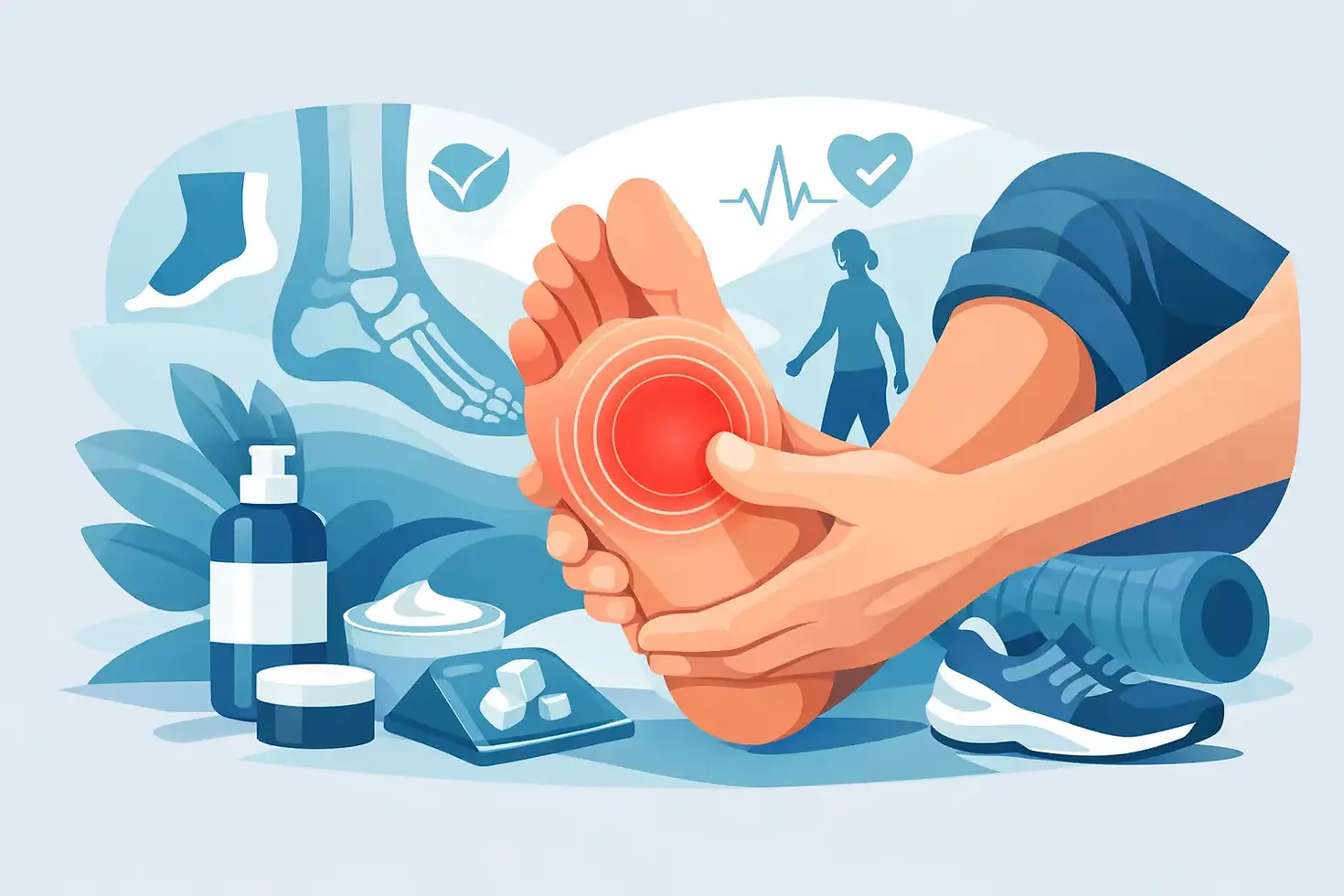
How to Foot Pain Relief That Lasts
- footporium
- May 22
- 6 min read

A sharp pain under the heel when you get out of bed. Burning across the ball of the foot after a long commute. Aching arches that make a short walk feel far longer than it should. If you have been searching for how to relieve foot pain, the first thing to know is that effective treatment depends on why your foot hurts in the first place.
Foot pain is rarely just a local problem. In many patients, the foot is the starting point of a wider mechanical issue affecting the ankle, shin, knee, hip or back. That is why short-term relief can be quite different from long-term improvement. Ice, rest or better shoes may settle symptoms, but if the underlying load, movement pattern or tissue irritation is still there, the pain often returns.
Relieving foot pain starts with the right diagnosis
The foot contains 26 bones, multiple joints, ligaments, tendons, nerves and soft tissues. Pain in one area can mean very different things. Heel pain may relate to plantar fasciitis, heel bursitis, a tight calf complex or irritation at the Achilles insertion. Forefoot pain may come from overloaded metatarsals, a neuroma, joint inflammation or footwear that compresses the toes.
This matters because the wrong self-treatment can delay recovery. Stretching may help one condition and aggravate another. Rest can be useful in the early stage of some injuries, but too much rest can weaken tissues and make return to activity harder. Even footwear advice is not one-size-fits-all. A very soft trainer may feel comfortable for one person and leave another less stable.
If pain is severe, recurrent, linked to swelling, numbness, trauma or difficulty bearing weight, a professional assessment is the safest next step. Persistent foot pain deserves more than guesswork.
What you can do at home for early foot pain relief
For recent or mild symptoms, simple measures can reduce irritation while you work out the cause. The key is to calm the painful tissue without stopping all movement unless walking is genuinely too painful.
Reducing aggravating activity for a few days often helps. That does not always mean complete rest. It may mean shortening walks, avoiding high-impact exercise, limiting time barefoot on hard floors or breaking up long periods of standing. If your pain flares after a certain route, class or shift pattern, that clue is useful.
Ice can help with pain and inflammation, especially after activity. A wrapped ice pack for 10 to 15 minutes is usually enough. Heat may feel better for stiffness, particularly around tight calf muscles, but if the area is hot and inflamed, cold is often the better option.
Over-the-counter pain relief can be appropriate for some people, provided it is suitable for their medical history and any pharmacist or GP advice. This can help you stay comfortable enough to move more normally, which is often part of recovery. It should not be used to push through worsening pain.
Gentle mobility and stretching can be useful when chosen carefully. Tight calves and restricted ankle movement commonly increase strain through the heel and arch. A basic calf stretch or rolling the sole of the foot over a small ball may help, but only if it reduces discomfort rather than provoking it.
Footwear changes often make a bigger difference than expected
Shoes are one of the most immediate ways to change load through the foot. Worn-out soles, poor support, very flat shoes and narrow toe boxes are common contributors to pain, especially when combined with long hours on your feet.
A good everyday shoe should feel stable through the heel, bend at the forefoot rather than the middle, and suit the shape of your foot. That does not mean everyone needs a heavily structured shoe. It means the shoe should match your activity, foot type and symptoms. Someone with heel pain may benefit from cushioning and a slightly raised heel drop, while someone with forefoot compression may need more room across the toes.
It is also worth looking at what you wear indoors. Many people switch from supportive outdoor shoes to unsupportive slippers or go barefoot at home, then wonder why morning heel pain keeps returning. Consistency matters, especially when tissues are already irritated.
Why persistent pain often needs a biomechanical view
If your pain keeps coming back, the question is not only where it hurts, but why that area is being overloaded. This is where biomechanics becomes important.
The way your foot moves affects force transfer through the rest of the limb. Limited ankle movement, poor big toe function, unstable midfoot mechanics, calf tightness and gait compensation can all shift stress into tissues that are not tolerating load well. That is why one person develops arch pain while another develops shin pain or knee discomfort from a similar movement pattern.
A biomechanical assessment can identify whether your symptoms are linked to walking style, joint restriction, muscle imbalance, training load, footwear mismatch or a combination of factors. For active people and runners, this is particularly relevant. Repetitive loading tends to expose even small inefficiencies.
In clinic, treatment may include targeted advice, exercises, padding, strapping, footwear recommendations and in some cases custom insoles or orthoses. The aim is not simply to cushion the painful area. It is to improve how forces move through the foot so irritated tissues can settle and function can improve.
Common situations where self-care is not enough
Some foot problems are more likely to need hands-on assessment. Plantar heel pain that lasts for weeks, pain in the ball of the foot that feels as if you are walking on a pebble, swelling around a tendon, repeated ankle instability and pain following an increase in running volume are all worth checking properly.
Children should also be assessed if they have ongoing foot or heel pain, limp, avoid activity or wear shoes unevenly. Foot pain in children is often dismissed as growing pains, but not every painful foot problem is harmless or self-limiting.
Patients with diabetes, inflammatory arthritis, circulation concerns or reduced sensation should be particularly cautious about home management. What seems minor can become more serious if pressure, skin breakdown or infection is involved.
Relieving foot pain for work, sport and daily life
Pain management has to fit the way you live. A teacher, warehouse worker, commuter and runner do not place the same demands on their feet, so the best plan will differ.
For work-related pain, the priority is often reducing cumulative load. That may mean changing shoes, using temporary insoles, pacing standing time where possible, and addressing hard flooring or repetitive tasks. For sporting pain, treatment usually involves load modification rather than stopping altogether. A runner may need a short reduction in mileage, attention to cadence or surface, and a gradual return plan rather than complete inactivity.
For people with long-standing symptoms, recovery is rarely about one perfect exercise or one pair of shoes. It is usually the combination that matters: accurate diagnosis, sensible activity changes, progressive rehabilitation and better control of the forces causing the problem.
When to see a podiatrist
You should consider a podiatry assessment if pain has lasted more than a couple of weeks, keeps returning, affects your walking, or starts to interfere with work, exercise or sleep. Early treatment is often simpler than waiting until the pain has altered the way you move.
A specialist assessment is also useful if you have tried changing footwear and resting but the problem still comes back. In those cases, the issue may not be lack of support alone. It may be how your joints and soft tissues are working together under load.
At a clinic with expertise in podiatric biomechanics, the assessment can go beyond the site of pain to look at the wider mechanical picture. For many patients, that is the point where treatment becomes more precise and relief starts to last rather than reset every few weeks.
What lasting relief usually looks like
Real improvement is not just a lower pain score for a day or two. It is being able to get out of bed without bracing for heel pain. It is finishing a shift without limping to the car. It is returning to training with confidence rather than worrying every run will set things off again.
If you are wondering how to relieve foot pain in a way that genuinely lasts, think less about quick fixes and more about matching the right treatment to the real cause. The sooner you understand why your foot is hurting, the easier it is to stop pain becoming part of your normal routine.


Comments