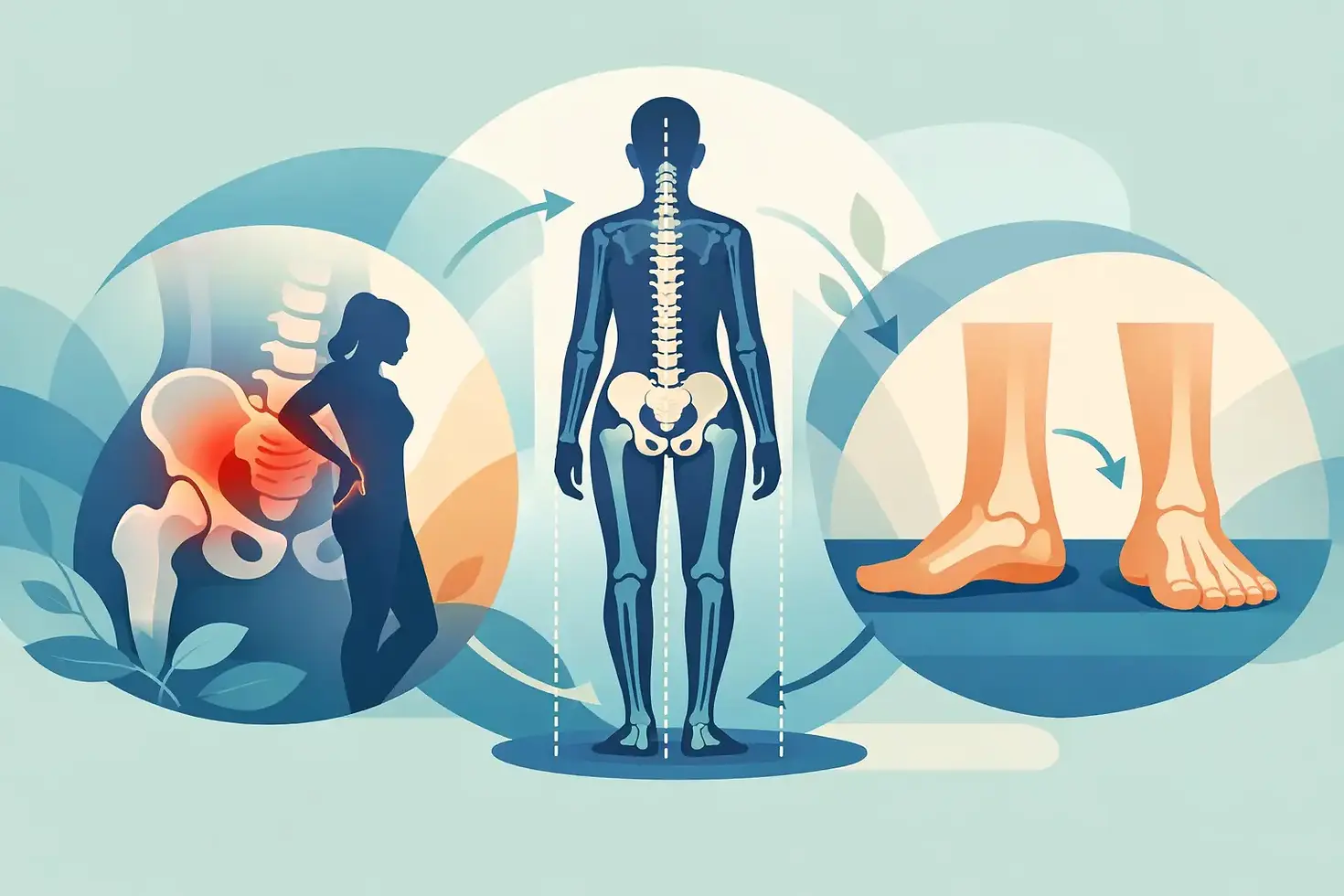
Hip Pain, Foot Alignment and How They Connect
- footporium
- 1 day ago
- 5 min read

A persistent ache at the outside of the hip, discomfort after a run, or pain when getting up from a chair may not begin at the hip itself. Hip pain and foot alignment can be connected because the feet are the foundation of every step. When the foot, ankle, knee and hip are not sharing load efficiently, the hip may have to work harder than it should.
That does not mean every case of hip pain is caused by the feet, or that a particular foot shape automatically needs treatment. Hip pain has many possible causes. However, where symptoms are linked to walking, standing, running or changes in activity, a podiatric biomechanics assessment can help identify whether lower-limb mechanics are contributing.
How foot alignment can affect hip pain
During walking, each foot needs to accept weight, adapt to the ground and then become stable enough to push off. The ankle, knee, hip and pelvis respond to what happens below them. This is often called the kinetic chain.
If a foot rolls inwards more or for longer than is comfortable for that individual, the shin may rotate inwards as well. This can influence the position and workload of the knee and hip. In some people, the muscles around the outer hip must work harder to control the pelvis with every step. Over time, particularly when activity levels rise, this may contribute to pain around the side, front or back of the hip.
The opposite pattern can also matter. A stiff foot that does not absorb load well, a high-arched foot, limited ankle movement or a tendency to walk more heavily on one side can alter the forces travelling up the leg. The issue is not simply whether a foot is ‘flat’ or ‘high arched’. It is how that foot functions during movement, how flexible it is, and whether the rest of the body can compensate comfortably.
Leg-length differences, previous ankle sprains, knee injuries and changes in footwear can all influence this picture. A person may have had a particular foot posture for years without symptoms, then develop hip pain after increasing mileage, returning to exercise, changing jobs or spending more time on hard surfaces.
Signs your hip pain may have a foot-mechanics component
Hip symptoms deserve an individual assessment, but certain patterns make it sensible to look at the feet and lower limbs as part of the problem. Pain that develops during or after longer walks, running or prolonged standing is one example. So is hip discomfort that occurs alongside recurring foot, ankle, shin or knee pain.
You may also notice that one shoe wears down more quickly, you feel less stable on one leg, or symptoms are worse in a particular pair of shoes. Some people describe their hip as tight while also reporting calf tightness, recurrent plantar heel pain or an ankle that has never felt quite the same since a sprain. These details can be clinically useful because they help build a picture of how you move, rather than focusing on the painful area alone.
Pain on the outside of the hip can be associated with irritation of the gluteal tendons or bursa, while pain at the front of the hip may have a different source. Lower back, groin and pelvic conditions can also refer pain into the hip area. This is why self-diagnosing from shoe wear or an online exercise video is rarely enough.
Foot posture is only one piece of the picture
It is tempting to look at wet footprints or compare the height of your arches and conclude that alignment is the answer. But static posture does not reliably show what happens when you walk or run. Many people with low arches have no pain at all, and many people with higher arches move very efficiently.
A useful assessment considers range of motion at the foot and ankle, strength, balance, walking pattern, footwear, training load and the location of symptoms. It should also consider the hip and pelvis where relevant. The aim is not to force every foot into an idealised position. It is to reduce unnecessary strain and improve the way the whole limb manages load.
What happens in a biomechanical assessment?
A podiatrist will begin by discussing your symptoms, medical history, work demands, exercise and footwear. Details such as the exact location of hip pain, when it starts, what makes it worse and whether it affects sleep are all relevant.
The clinical examination may include observing you standing, walking and, where appropriate, running. Your podiatrist may assess foot and ankle movement, calf flexibility, joint position, strength and balance. They may also examine areas of tenderness and identify whether one side is taking more load than the other.
This does not replace assessment by a GP, physiotherapist or other specialist when hip pathology is suspected. Good musculoskeletal care is often collaborative. If your presentation suggests a problem within the hip joint, the lower back, or another medical cause, onward referral or further investigation may be the right next step.
At Footporium Podiatry, biomechanics assessments focus on practical findings: what is likely driving your symptoms, what can be changed, and what needs further assessment elsewhere. The treatment plan should be tailored to your goals, whether that is walking to work without discomfort, returning to a sport or managing pain that has made daily life harder.
Treatment: more than changing your insoles
When foot mechanics contribute to hip pain, treatment often works best as a combination rather than a single fix. Footwear advice can make an immediate difference if shoes are worn out, unsupportive for your needs, too narrow, or unsuitable for the activity you are doing. The right choice depends on your foot shape, walking pattern and the demands placed on your body. A shoe that suits one runner may not suit another.
Exercises may be recommended to improve ankle mobility, calf capacity, foot control, balance or hip strength. In hip-related cases, building capacity in the gluteal muscles and improving single-leg control can be particularly helpful. Exercise should be progressed at an appropriate pace. Pushing through escalating pain is not usually a productive strategy, but complete rest for long periods can also reduce strength and confidence.
Custom or prefabricated orthoses may be considered when they are likely to improve comfort, reduce excessive strain or support a specific mechanical need. Orthoses do not ‘correct’ every aspect of alignment, and they are not necessary for everyone. Their purpose is to influence load and movement in a way that helps the individual function with less pain. Fit, footwear compatibility and follow-up matter as much as the device itself.
For some patients, managing training volume is equally important. A sudden increase in running distance, hills, court sport or standing at work can exceed what the tissues around the hip are currently able to tolerate. A gradual plan, combined with appropriate strength work and attention to mechanics, is often more sustainable than simply stopping all activity.
When to seek medical advice promptly
Do not assume hip pain is a biomechanics issue if it follows a significant fall or injury, causes an inability to bear weight, or is severe and rapidly worsening. Urgent medical advice is also appropriate for a hot, swollen hip, fever, unexplained weight loss, new numbness or weakness, or pain that is persistent at night and unrelated to position or activity.
Children and adolescents with hip or groin pain should be assessed promptly, particularly if they are limping or avoiding weight-bearing. Hip problems in younger people can require timely medical investigation.
For less urgent but persistent symptoms, seek professional assessment if pain is changing how you walk, limiting work or exercise, or failing to settle despite sensible adjustments. The longer the body compensates, the more likely other areas can become irritated.
A thoughtful plan starts with understanding your individual movement pattern, not blaming your feet for every ache. If hip pain is making walking, exercise or everyday tasks difficult, assessing the whole lower limb can provide a clearer and more useful route towards comfortable movement.


Comments