
Best Foot Pain Treatment for Lasting Relief
- footporium
- May 21
- 6 min read

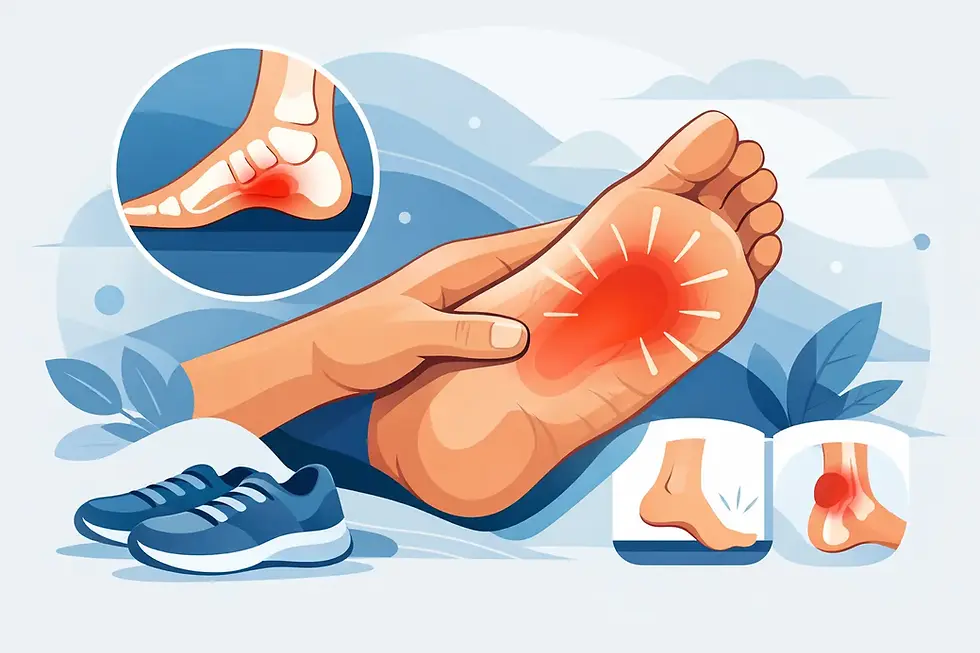
That first sharp step out of bed, the ache that builds during a commute, or the burning under the ball of the foot after a run all point to the same truth: the best foot pain treatment depends on why your foot hurts in the first place. Pain in the foot is rarely random. It usually reflects a problem in tissue loading, joint function, footwear, gait, or a combination of these, and the most reliable treatment starts with getting that cause right.
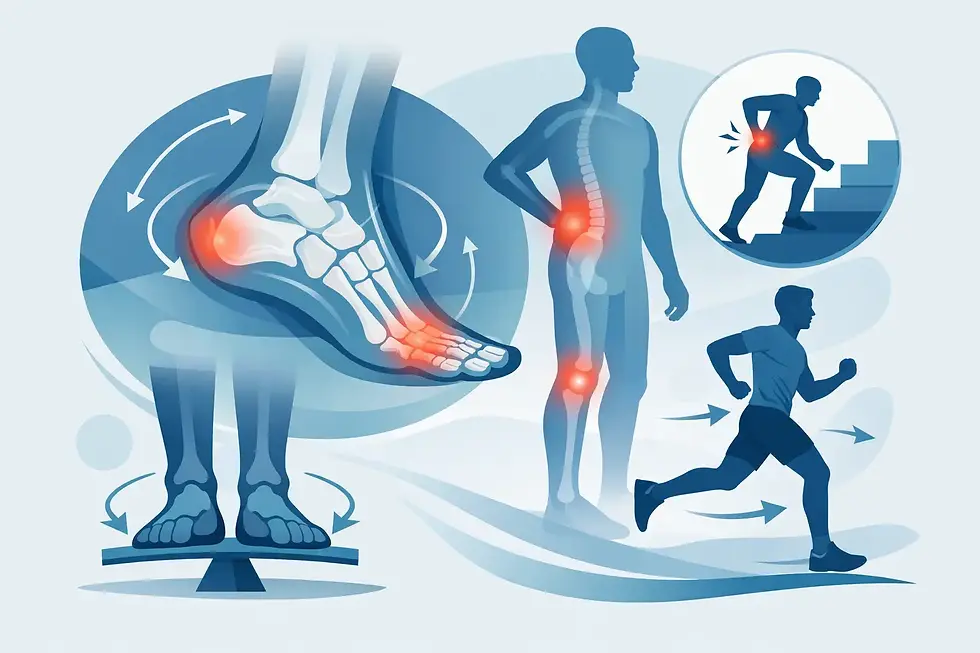
Many people try to push through foot pain or rely on short-term relief. That can work for minor irritation, but persistent pain often becomes harder to settle when the underlying mechanics are left unchecked. A sore heel may not just be a heel problem. Forefoot pain may reflect calf tightness, footwear pressure, or instability elsewhere in the foot. In some cases, even knee, hip, or back symptoms are part of the same pattern.
What is the best foot pain treatment?
The best foot pain treatment is the one matched to the diagnosis, the severity of symptoms, and the way you move day to day. There is no single remedy that works for every patient. Rest may help one person, while another needs pressure redistribution, exercise therapy, nail or skin care, footwear changes, or biomechanical support such as insoles.
This is why a proper assessment matters. It helps distinguish between common causes such as plantar heel pain, metatarsalgia, tendon irritation, arthritis, neuroma, stress injury, or pain linked to flat or highly arched feet. Two people can describe "foot pain" and need completely different care.
A good treatment plan should do three things. It should calm pain, improve function, and reduce the chance of the problem returning. If only the first part is addressed, symptoms often come back as soon as activity increases again.
Why the cause matters more than the symptom
Foot pain is a broad symptom, not a diagnosis. Heel pain may be linked to plantar fascia strain, but it can also involve the fat pad, a nerve, or inflammatory conditions. Pain across the top of the foot may come from overuse, joint irritation, extensor tendons, or a stress response in bone. Pain around the big toe can stem from joint degeneration, gait changes, or footwear crowding the forefoot.
This matters because treatment that is sensible for one condition can aggravate another. Stretching may be useful for some heel pain patterns but less helpful if a stress fracture is being missed. Cushioned trainers may help in one situation, while a more stable shoe is better in another. Even orthotics are not a one-size-fits-all answer. They can be highly effective when prescribed for the right mechanical issue, but they need to reflect the patient's foot shape, activity level, and symptoms.
The treatments that often work best
For many patients, the most effective approach combines several treatments rather than relying on one. Load management is often the starting point. That does not always mean complete rest. More often, it means modifying walking, running, standing time, or sport so irritated tissues have a chance to settle without losing all routine and fitness.
Footwear changes are frequently overlooked, yet they can make an immediate difference. Shoes that are too flexible, too worn, too narrow, or unsupportive for the task can keep symptoms going. The right shoe depends on the condition. A patient with forefoot pain may need more cushioning and room through the toe box, while a patient with heel pain may benefit from a shoe with stable rearfoot control and appropriate shock absorption.
Targeted exercise is another key part of best foot pain treatment. This may involve calf flexibility, plantar fascia loading, intrinsic foot strengthening, ankle mobility work, or exercises for the lower limb further up the chain. If the foot is absorbing force poorly because of weakness or stiffness elsewhere, treatment should reflect that. Pain is often reduced more effectively when the whole movement pattern is assessed.
Manual care and hands-on treatment can also help in the right cases, especially where there is joint restriction, soft tissue overload, or painful callus and pressure points. For skin and nail problems, reducing pressure and irritation can have a major effect on comfort when walking.
Orthotic therapy can be very helpful for patients with persistent mechanical pain. Insoles may offload a painful structure, improve foot function, and reduce strain travelling up into the ankle, shin, knee or hip. The key is careful prescription rather than generic arch supports bought without assessment. Custom or semi-custom options are often most useful when symptoms are longstanding, recurrent, or linked to clear biomechanical factors.
Best foot pain treatment by pain location
Heel and arch pain
Heel pain often responds well to a combination of activity modification, calf and plantar fascia loading work, footwear review, and in some cases orthotic support. Morning pain or pain after rest is common in plantar heel pain, but it should still be assessed properly if it persists. If symptoms have been present for weeks or are worsening, a more structured treatment plan is usually needed.
Forefoot pain
Pain under the ball of the foot, burning in the toes, or tenderness around the metatarsals can be linked to overload, nerve irritation, joint issues, or toe deformity. Treatment often includes pressure redistribution, footwear advice, padding or insoles, and addressing any gait pattern that keeps overloading the same area.
Midfoot pain
Midfoot pain can be especially stubborn because it is often aggravated by everyday walking. Supportive footwear, stabilising insoles, and activity adjustment are commonly helpful. Because this area can also be affected by joint strain or stress injury, prolonged or severe pain should not be ignored.
Ankle and tendon-related pain
Pain around the ankle or along tendons such as the tibialis posterior, peroneals or Achilles usually needs a combination of load management and progressive rehabilitation. Simply resting until it feels better is often not enough, because the tendon then flares again when activity returns.
When home care is reasonable, and when it is not
If foot pain is mild, recent, and clearly linked to a change in footwear or a short spell of overactivity, simple self-care may be reasonable for a few days. Reducing aggravating activity, wearing more suitable shoes, and avoiding barefoot walking on hard floors can help. Gentle stretching or mobility work may be useful, depending on symptoms.
But there are situations where professional assessment is the better route. Pain that lasts more than two weeks, keeps returning, changes the way you walk, or stops you working or exercising properly deserves closer attention. The same applies if there is swelling, bruising, night pain, numbness, or a sudden increase in symptoms. In children, ongoing foot pain should always be assessed rather than dismissed as growing pains.
Why specialist assessment improves outcomes
The reason some foot pain keeps coming back is that treatment has only addressed the sore spot, not the reason it became sore. A specialist biomechanical assessment looks at alignment, joint motion, muscle function, gait, and pressure patterns as well as the painful area itself. That fuller picture is often what turns recurring pain into a manageable and treatable problem.
At Footporium Podiatry, this is where podiatric biomechanics can make a real difference. For patients with persistent heel pain, recurrent forefoot pressure, sports-related symptoms, or pain that seems to travel into the ankle, shin, knee or hip, understanding the mechanics is often the missing step.
This does not mean every patient needs complex treatment. Often, the value lies in identifying the simplest effective option. That may be a change in shoe type, a tailored insole, a specific exercise plan, or reassurance that the condition is manageable with the right adjustments.
What to avoid when trying to treat foot pain
One common mistake is relying entirely on painkillers while continuing the same aggravating activity. Another is buying multiple off-the-shelf products without knowing whether the issue is one of cushioning, support, fit, pressure, or tissue overload. More support is not always better, and more softness is not always better either.
Ignoring symptoms for too long can also make treatment slower. Early care is often simpler care. When a problem has been present for months, compensations may already have developed in the way you walk and load the limb.
The best foot pain treatment is rarely about chasing quick fixes. It is about identifying the structure involved, understanding what is driving the pain, and using the right combination of support, rehabilitation, and mechanical correction. If your foot pain is interfering with work, exercise, or everyday comfort, getting it assessed properly is often the fastest route back to confident movement.

Comments