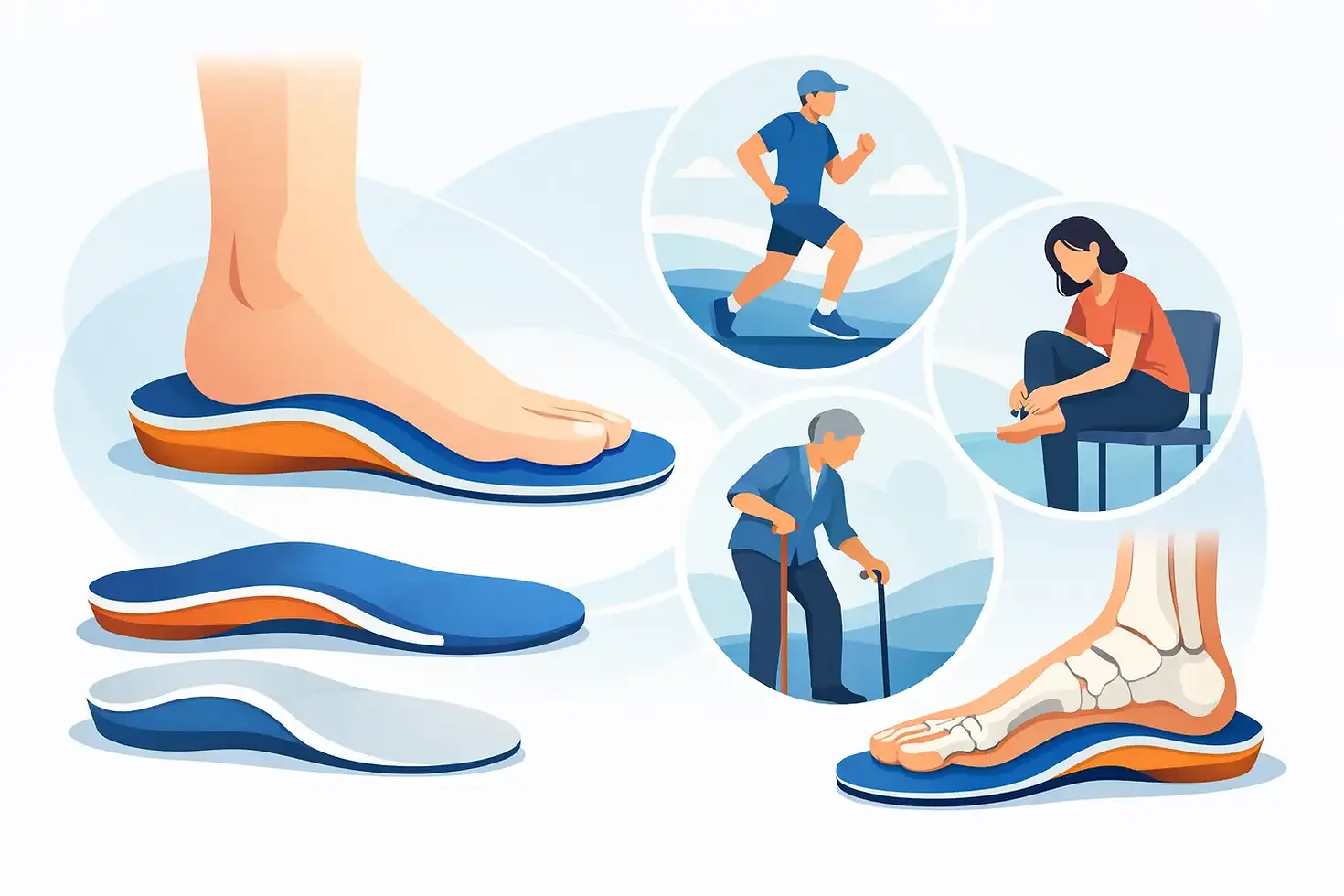
Custom Orthotics: Who Needs Them?

That ache under your heel when you get out of bed, the knee pain that builds on a walk, the burning under the ball of the foot by late afternoon - these are the kinds of problems that often bring people to ask about custom orthotics. They are not simply cushioned inserts. When prescribed properly, they are a clinical treatment designed to change how force moves through your feet and up the rest of the body.
For some people, custom orthotics can make a meaningful difference to comfort, walking and sport. For others, they are only one part of the answer, alongside footwear advice, exercises, load management or treatment for a specific injury. The key is not whether orthotics are fashionable or widely advertised. The key is whether your mechanics, symptoms and goals point to them as the right option.
What are custom orthotics?
Custom orthotics are prescription foot devices made to match your foot shape and, more importantly, your functional needs. That second point matters. A device that looks neat in a shoe is not necessarily doing the job you need it to do.
In podiatric biomechanics, orthotics are used to influence the way the foot and lower limb deal with load. They may help reduce excessive strain on a painful structure, improve stability, redistribute pressure, or encourage a more efficient movement pattern. Depending on the problem, the aim might be to reduce heel pain, offload the forefoot, support a flatter foot type, or improve control in someone whose ankle or knee is repeatedly overloaded.
This is why custom orthotics are very different from off-the-shelf insoles bought in a chemist or sports shop. Retail insoles can be useful for basic cushioning or short-term comfort, but they are general products. A custom device is chosen and prescribed around an assessment of your symptoms, foot posture, gait and overall biomechanics.
When custom orthotics may help
Orthotics are most useful when pain is linked to the way forces are travelling through the foot and leg. A person might present with plantar heel pain, arch strain, forefoot overload, tendon pain around the ankle, shin discomfort, or even knee, hip or lower back symptoms where foot mechanics are a contributing factor.
They can also help in cases where pressure redistribution is important. If one part of the foot is repeatedly overloaded, this may lead to corns, callus, metatarsalgia or discomfort during standing and walking. In these cases, changing pressure patterns can be just as important as adding soft material.
Children and teenagers can sometimes benefit too, particularly if they have painful flat feet, fatigue with activity or movement patterns that are putting strain on muscles and joints. Equally, many adults with long-standing aches assume pain is simply part of ageing, when in fact there may be a treatable mechanical issue behind it.
That said, orthotics are not a cure-all. If pain is driven primarily by inflammatory arthritis, nerve irritation, a stress fracture, poorly controlled diabetes-related complications or a skin and nail condition, the management plan may need to focus elsewhere first. Good assessment matters because the same symptom - such as forefoot pain - can have several very different causes.
How a podiatrist decides if you need them
It starts with the diagnosis
Before any orthotic is considered, the first question should be: what is actually causing the pain? This sounds obvious, but many people have already tried generic insoles before they have had a proper diagnosis.
A biomechanics-focused assessment looks at where the pain is, what aggravates it, how long it has been present, what footwear you use, and whether there are contributing issues higher up the chain. Your podiatrist will usually assess joint movement, muscle function, alignment and gait. In some cases, the way you stand is less important than the way you move, especially during walking, running or prolonged time on your feet at work.
The aim is function, not just support
There is a common assumption that orthotics are there to "support the arch". Sometimes they do influence arch function, but that is too simple a description. The real aim is to change loading in a targeted way.
For example, one patient with heel pain may need better control of excessive motion through the foot. Another may need shock reduction and improved calf function. A runner with repeated shin pain may need a different approach from someone who stands all day in safety shoes. Two people can have similar symptoms and need very different devices.
What custom orthotics can realistically do
The best results tend to come when expectations are clear. Orthotics can reduce strain, improve comfort and help you tolerate activity better. They may make walking easier, improve running capacity, or reduce the fatigue that builds through the foot and leg over the day.
What they usually do not do is instantly "fix" every underlying issue. If a tendon is weak, if calf strength is poor, or if footwear is unsuitable, those factors still need attention. In many cases, the most effective treatment plan combines orthotics with exercises, hands-on care, footwear changes and advice about training or workload.
This is especially true for persistent problems. Longstanding plantar fasciopathy, recurrent Achilles tendon pain or overload through the forefoot often reflects more than one contributing factor. Orthotics can be an important part of the solution without being the whole solution.
Off-the-shelf insoles versus custom orthotics
When prefabricated insoles may be enough
Not everyone needs a fully custom device. A good-quality prefabricated insole can sometimes work well for mild symptoms, short-term support, or situations where the issue is straightforward and responds quickly. They can also be a practical stepping stone while symptoms and footwear are being reviewed.
When custom is worth it
Custom orthotics become more valuable when the problem is persistent, more complex, linked to clear biomechanical findings, or not responding to simpler measures. They are also useful when feet are hard to fit, footwear requirements are specific, or pressure needs to be redistributed very precisely.
At a specialist clinic such as Footporium Podiatry, this decision is based on clinical need rather than a one-size-fits-all recommendation. That matters, because unnecessary treatment is no better than insufficient treatment.
What wearing orthotics feels like
A well-prescribed orthotic should feel purposeful, not brutal. You may notice that your foot sits differently in the shoe, that pressure is reduced in one area, or that walking feels more controlled. There can be an adjustment period, particularly if your previous mechanics placed stress on the same tissues for a long time.
Some people expect orthotics to feel soft and pillow-like. In reality, comfort can come from better load distribution rather than extra cushioning. A firmer device is not automatically better, and a softer one is not automatically more comfortable in the long run. It depends on the condition being treated, your activity level and the type of footwear you need to use.
Follow-up is important. If a device needs refining, this should be based on how your symptoms respond over time, not simply whether the orthotic feels unusual on day one.
Footwear still matters
Custom orthotics can only work properly inside suitable shoes. If a shoe is unstable, too flexible, too narrow or badly worn, even an excellent orthotic may be limited. The relationship between the device and the shoe is often overlooked, yet it has a major effect on outcome.
This does not mean everyone needs bulky trainers. It does mean your podiatrist should consider what you wear for work, exercise and daily life. An orthotic for running shoes may not be ideal for formal work shoes, and a device for football boots will have different design priorities from one used for all-day standing.
Are custom orthotics right for you?
If pain in your foot, ankle, shin, knee or even lower back seems to worsen with walking, standing, sport or long days on your feet, it is reasonable to ask whether mechanics are part of the picture. Custom orthotics may be appropriate if assessment shows that changing load through the foot is likely to reduce strain and improve function.
The most useful question is not "Do orthotics work?" It is "Will they help this problem, in this person, at this stage?" That is where specialist biomechanical assessment makes the difference.
If you have been putting up with recurring pain, or replacing shop-bought insoles without lasting improvement, a proper assessment can clarify whether custom orthotics are likely to help - and just as importantly, whether something else should come first. The right treatment should make moving easier, not more complicated.


Comments